
What Egg Freezing Really Means for Dwarka Families
Egg freezing is not just a medical procedure — for families in Dwarka, it represents a shift in how women can approach the relationship between career, marriage, and motherhood. Many women living in Dwarka's busy sectors juggle government service timelines, private sector appraisal cycles, and family expectations simultaneously. The biological clock, unfortunately, does not pause for any of these milestones.
Oocyte cryopreservation gives women the ability to preserve eggs at peak quality — typically in their late 20s or early 30s — and use them later through IVF when they are emotionally and financially ready. For Dwarka residents who may be waiting for the right partner, completing a postgraduate degree, or building career stability before starting a family, egg freezing is a medically sound safety net.
HomeIVF's approach is especially relevant here. Rather than asking a working professional from Dwarka Sector 10 or Sector 19 to take multiple half-days off work to visit a fertility clinic in Lajpat Nagar or Rohini, HomeIVF coordinates a significant portion of the fertility journey — consultations, monitoring, counselling — from the comfort of your home. This model resonates deeply with the practical, planning-oriented community that Dwarka has always been.
The Egg Freezing Process: Step by Step
Understanding the egg freezing process helps remove the anxiety around it. The journey typically unfolds across four key phases, and HomeIVF's care coordinators walk Dwarka patients through each one.
Phase 1 — Initial Assessment: A detailed fertility evaluation is conducted, including an AMH (Anti-Müllerian Hormone) blood test and an antral follicle count via ultrasound. These tests reveal your ovarian reserve and help predict how your body will respond to stimulation.
Phase 2 — Hormonal Stimulation: Over 10 to 14 days, self-administered injectable hormones stimulate the ovaries to develop multiple follicles simultaneously. HomeIVF's care team can guide patients through these injections remotely, reducing clinic visits.
Phase 3 — Egg Retrieval: Once follicles reach the right size, a trigger injection is given. Approximately 36 hours later, eggs are retrieved under light sedation at a partner facility. The procedure typically takes 20 to 30 minutes.
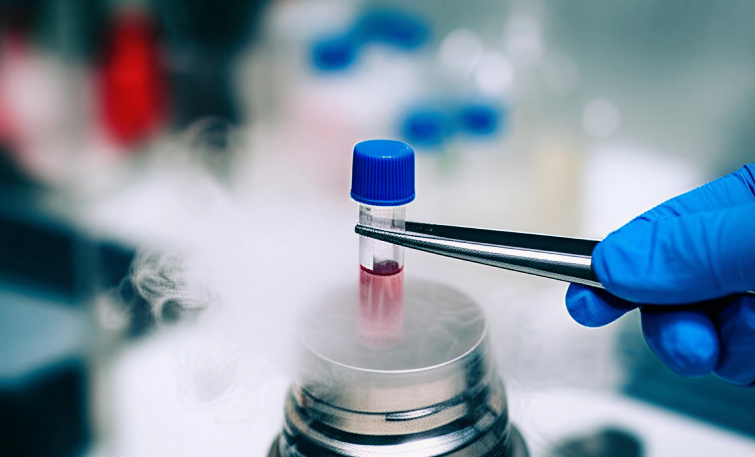
Phase 4 — Vitrification and Storage: Retrieved eggs are flash-frozen using vitrification — the gold-standard cryopreservation method — and stored in liquid nitrogen tanks. When you are ready to use them, eggs are thawed, fertilised via ICSI, and transferred as embryos.
For Dwarka residents, the hybrid model — home-based consultations plus clinical procedures at a nearby empanelled centre — means the process is far less disruptive to daily life.
Talk to a Fertility Expert — Free
Book a free consultation. Our specialists will guide you on the right path, including Home IVF.
or chat on WhatsApp →Medical Decision Drivers: Age, Timing, and Cost Clarity
The single most important factor in egg freezing success is age. Egg quality peaks between 25 and 32 years and begins to decline more noticeably after 35. Women who freeze eggs before 35 have significantly higher chances of a successful pregnancy when they use those eggs later. This is why fertility specialists — including the HomeIVF Medical Board — consistently encourage women to think about egg freezing proactively, not reactively.
Common medical reasons women in Delhi and across India choose to freeze eggs include: career or lifestyle postponement of marriage; a recent diagnosis of conditions like PCOS, endometriosis, or diminished ovarian reserve; planned cancer treatment that may affect fertility; and simply wanting the reassurance of a biological backup plan.
The concern about egg freezing cost in Delhi is valid and common. Many Dwarka families associate fertility preservation with prohibitively expensive private hospital packages. HomeIVF was built to challenge that assumption. By delivering a tech-enabled, at-home model with senior specialist oversight, HomeIVF reduces overhead costs and passes those savings to patients — with packages starting from ₹1.5 lakh. Cost clarity, detailed package breakdowns, and EMI options are all part of the first consultation conversation, so there are no surprises.
Add HomeIVF as a Preferred Source on Google to make it easier to find our latest fertility and IVF guides.
HomeIVF Package vs Typical Fertility Clinics in Delhi
When comparing egg freezing options in Delhi, it is important to look beyond the headline price and understand what is actually included in a package. Typical fertility clinics in Delhi — even reputed ones in Rajouri Garden, Janakpuri, or South Delhi — often quote a base procedure cost that excludes medications, monitoring scans, anaesthesia, storage fees, and counselling. These additions can significantly inflate the final bill.
HomeIVF takes a different approach. The package is designed to be comprehensive and transparent. A standard HomeIVF egg freezing engagement includes: an initial tele-consultation with a senior fertility specialist from the HomeIVF Medical Board; a full diagnostic workup including AMH, Day 2 FSH, LH, and ultrasound; personalised stimulation protocol with medication guidance; cycle monitoring support (with reduced in-person scan visits); egg retrieval coordination at an empanelled clinical partner; vitrification using the latest closed-loop cryosystem; and a post-retrieval debrief session.
For Dwarka residents specifically, the at-home consultation model means you are not paying indirectly for a clinic's prime real estate or front-desk overheads. You are paying for medical expertise delivered efficiently. HomeIVF's model is peer-reviewed and overseen by the HomeIVF Medical Board to ensure clinical safety is never compromised for convenience.
Why At-Home Fertility Care Suits Dwarka Residents Perfectly
Anyone who has tried driving from Dwarka Sector 7 to a fertility clinic in South Delhi during rush hour knows exactly how punishing that commute can be. The NH-48 stretch toward Mahipalpur, the Outer Ring Road bottlenecks, and the parking situation at most hospital campuses add stress to what is already an emotionally sensitive process. For fertility patients, stress is not a minor inconvenience — it can measurably affect hormonal balance and treatment outcomes.
HomeIVF's model is built for exactly this reality. Initial consultations, follow-up reviews, medication guidance, and counselling sessions all happen via HomeIVF's digital platform or through home visits where applicable. Patients in Dwarka only need to travel to a clinical partner for specific procedural steps — scans on certain cycle days and the retrieval itself — significantly reducing the number of trips.
Beyond logistics, there is a privacy dimension that matters deeply to many Dwarka families. Fertility journeys are personal. Running into a colleague or neighbour in a clinic waiting room is a concern many patients express. Home-based consultations with HomeIVF eliminate that discomfort entirely. For defence families, government employees, or professionals in Dwarka who value discretion, this is a meaningful advantage. Senior specialist oversight from the HomeIVF Medical Board ensures that the at-home model never trades convenience for clinical rigour.
Local Considerations: Navigating Fertility Care Near Dwarka
Dwarka is exceptionally well-connected by Delhi Metro's Blue Line, with stations from Dwarka Sector 21 (Terminal 1 end) through to Dwarka Mor and Nawada providing access to a wide corridor of the city. For the specific clinical steps of egg freezing that require in-person attendance, HomeIVF partners with accredited facilities that are accessible from Dwarka without requiring a cross-city journey.
Patients in Dwarka Sector 1, Sector 6, Sector 12, and Sector 23 can typically reach empanelled clinical partners in West or South-West Delhi within 20 to 35 minutes, especially if appointments are scheduled outside peak commute hours — a logistics tip that HomeIVF care coordinators actively help with.
Dwarka's community profile also means that awareness of fertility preservation is growing. The area's large population of educated, career-oriented women — many of whom live near Dwarka's well-developed institutional zones with schools, colleges, and government offices — increasingly researches options like egg freezing online. The presence of the Indira Gandhi International Airport nearby also means that Dwarka-based NRIs and diaspora families returning to India for fertility treatment find it a convenient base. HomeIVF's digital-first model is particularly suited to this internationally mobile demographic.
Insurance, EMI Options, and Financial Planning for Egg Freezing
One of the most frequently asked questions from Dwarka patients is whether health insurance covers egg freezing. The honest answer is that most standard health insurance policies in India — including government employee policies like CGHS — do not currently cover elective fertility preservation. Medical fertility preservation (e.g., before cancer treatment) is sometimes partially covered, but elective social egg freezing remains largely out-of-pocket.
This makes financial planning an important part of the egg freezing conversation. HomeIVF integrates financial counselling into its onboarding process. Patients are walked through the full cost structure, what is included, what might be additional (such as extended storage beyond the initial period), and what EMI or staggered payment options are available through partnered financial services.
Many Dwarka families find that breaking the total cost into manageable monthly instalments makes egg freezing significantly more accessible. For government employees with predictable salary structures, an EMI aligned to a monthly budget is often a practical route. HomeIVF's care coordinators can connect patients with zero-cost or low-cost EMI options through partner NBFCs and fintech platforms. The HomeIVF Medical Board's position is clear: financial barriers should not prevent women from accessing a procedure that can meaningfully expand their reproductive choices.
How to Start Your HomeIVF Consultation from Dwarka Today
Starting your egg freezing journey with HomeIVF from Dwarka is straightforward and requires no prior paperwork or referrals. The process begins with a free initial consultation — bookable directly through the HomeIVF website or app in under two minutes.
During this first session, a care coordinator will understand your medical history, current life stage, and goals. You will then be connected with a senior fertility specialist from the HomeIVF Medical Board for a detailed clinical consultation — conducted via video call from your home in Dwarka. Based on your profile, a personalised egg freezing roadmap is created.
Following the consultation, a diagnostic package is arranged — either through a home sample collection for blood tests or a nearby partner diagnostic centre — before your stimulation cycle begins. Throughout the cycle, HomeIVF's digital platform keeps you informed with daily check-ins, medication reminders, and direct access to your care team.
For women in Dwarka who have been thinking about egg freezing but kept postponing it — waiting for the 'right time' to book an appointment — HomeIVF removes every logistical barrier that typically causes delay. The right time is now, and the consultation is free. Residents across Dwarka's sectors, from the busy commercial stretches near Dwarka Mor to the quieter residential blocks of Sector 23, are already taking this step with HomeIVF.
Frequently Asked Questions
What is the best age to freeze eggs in Dwarka, Delhi?+
The ideal age window for egg freezing is between 25 and 35 years. Egg quality and quantity are at their peak in the late 20s and begin to decline more noticeably after 35. Women in Dwarka considering egg freezing are encouraged to consult early — even if they do not plan to use the eggs for several years. The HomeIVF Medical Board recommends an AMH test as the first step to assess your current ovarian reserve.
Is egg freezing available near me in Dwarka without going to South Delhi?+
Yes. HomeIVF's model is specifically designed to reduce cross-city travel. A significant portion of your egg freezing journey — consultations, medication guidance, monitoring support, and counselling — happens from your home in Dwarka. Only specific procedural steps require visiting an empanelled clinical partner, which HomeIVF helps locate as close to Dwarka as possible, often in West or South-West Delhi within a short commute.
How much does egg freezing cost in Dwarka, Delhi?+
Egg freezing costs in Delhi vary widely depending on what is included in the package. HomeIVF offers comprehensive egg freezing packages starting from ₹1.5 lakh, which includes consultation, diagnostics, stimulation monitoring support, retrieval coordination, and vitrification. Unlike many clinics that quote base prices and add costs later, HomeIVF's packages are designed to be transparent. A free initial consultation will give you a clear cost breakdown for your specific case.
How many eggs should I freeze for a good chance of success later?+
Most fertility specialists, including the HomeIVF Medical Board, recommend aiming to freeze at least 10 to 15 mature eggs for women under 35 to achieve a reasonable probability of at least one successful pregnancy later. The exact number depends on your age, ovarian reserve (AMH levels), and response to stimulation. Some women achieve this in a single retrieval cycle, while others may consider two cycles. Your HomeIVF care team will set realistic expectations based on your individual profile.
Is the egg freezing process painful? What is the recovery like?+
Most women describe the daily hormone injections during the stimulation phase as mildly uncomfortable rather than painful. The egg retrieval procedure is performed under light sedation, so you will not feel pain during the procedure itself. Post-retrieval, mild bloating and pelvic discomfort are common for one to three days. Serious complications like ovarian hyperstimulation syndrome (OHSS) are rare when monitoring is done correctly. HomeIVF's care team monitors patients throughout the stimulation phase to minimise risk.
Can women with PCOS freeze their eggs in Dwarka, Delhi?+
Yes, women with PCOS can absolutely undergo egg freezing, and in fact often respond robustly to stimulation due to higher follicle counts. However, PCOS patients require careful, individualised stimulation protocols to avoid ovarian hyperstimulation syndrome (OHSS). The HomeIVF Medical Board has specific PCOS-adapted protocols that prioritise safety. If you have been diagnosed with PCOS and are based in Dwarka, a free HomeIVF consultation is an excellent starting point to understand your options.
How long can eggs be stored after freezing in Delhi?+
Eggs frozen using modern vitrification techniques can be stored safely for extended periods — typically 5 to 10 years, and potentially longer, depending on the storage facility's protocols and local regulatory guidelines. The quality of properly vitrified eggs does not significantly deteriorate during storage. HomeIVF's partner storage facilities maintain stringent quality standards. Annual storage fees apply after an initial included period, and your care coordinator will explain these costs upfront during your consultation.
Does CGHS or private insurance cover egg freezing for Dwarka government employees?+
Currently, most health insurance schemes in India — including CGHS, which covers many government employees and their families in Dwarka — do not reimburse elective egg freezing. Medical fertility preservation (such as before chemotherapy) may qualify for partial coverage in some cases. HomeIVF provides detailed documentation and letters from the HomeIVF Medical Board to support any insurance queries. EMI and staggered payment options are available to help Dwarka families manage costs effectively.
References & Medical Sources
Add us as a Preferred Source to surface HomeIVF information more prominently in your personalized Google experience when relevant.