



IVF & ICSI – A Pathway to Parenthood
IVF & ICSI – A Pathway to Parenthood
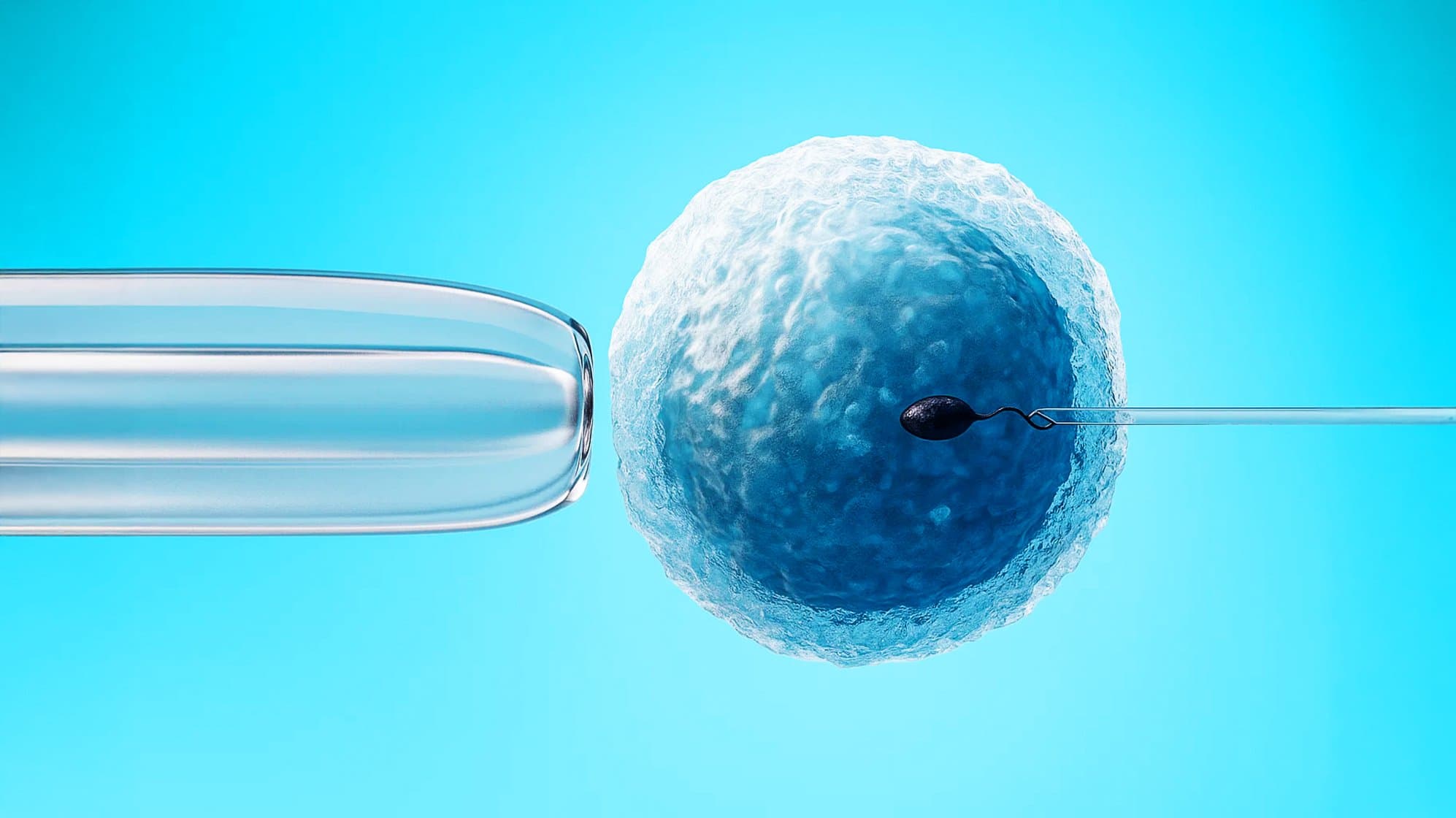
3D medical illustration of ICSI treatment showing a single sperm being injected into an egg with a microneedle during assisted fertilization in IVF
What is IVF?
IVF stands for In Vitro Fertilisation. It is a process where eggs are fertilized outside the human body. In this procedure, eggs and sperm are placed in a dish and left to incubate overnight so they can fertilize. However, if the quality of sperm is not good enough at the time of egg collection, we can recommend ICSI as an alternative.
When is IVF recommended?
IVF may be suggested for several reasons, such as:
-
You are over 40 years old or have a lower number of eggs.
-
You have blocked or damaged fallopian tubes.
-
You have endometriosis.
-
There are concerns about the quality of sperm.
-
Previous attempts at Intrauterine Insemination (IUI) were unsuccessful.
What is ICSI?
ICSI or Intra-Cytoplasmic Sperm Injection is a procedure that involves the injection of a single sperm directly into a mature egg and ensures that if the sperm were injected, they would successfully fertilize the egg. Just before the injection, the outer cells of the egg are removed most delicately, then the high-power microscope is used to decide which eggs are ready for fertilization.
When is ICSI recommended?
ICSI might be recommended if:
-
There are issues with male fertility.
-
Sperm needs to be retrieved surgically.
-
Previous IVF cycles failed to fertilize eggs.
-
There was low fertilization in earlier IVF attempts.
Preparing for IVF or ICSI at HomeIVF
Before starting your IVF or ICSI treatment, certain steps are essential to optimize your chances of success and ensure a smooth journey:
-
Maintaining a Healthy BMI: It’s recommended that your Body Mass Index (BMI) be within the range of 19 to 30. This range is associated with better response to treatment and overall health. To calculate your BMI, divide your weight in kilograms by your height in meters squared. If your BMI falls outside this range, consult the nutritionists at HomeIVF for guidance and the necessary steps.
-
Ovarian Reserve Assessment: A blood test for anti-Mullerian hormone (AMH) is conducted to evaluate your ovarian reserve. This test can be performed on any day of your menstrual cycle and provides valuable insights for tailoring your treatment plan.
-
Rubella Immunity Screening: Immunity against Rubella (German Measles) is crucial to protect both you and your future child. If you are not immune, a vaccination may be advised before beginning treatment.
-
Comprehensive Blood Tests: Screening for infections such as Hepatitis B, Hepatitis C, HIV 1 & 2, Syphilis, and HTLV 1 & 2 is mandatory to ensure your safety and the health of the baby. These tests are required for both partners and must be conducted within three months before starting treatment.
-
Medical and Specialist Review: If you have any existing medical conditions, additional evaluations, such as pre-conception counseling or anesthetic reviews, may be necessary.
The HomeIVF team is committed to adhering to the ethical standards and guidelines established by the Indian Council of Medical Research (ICMR) and the Assisted Reproductive Technology (Regulation) Act, 2021.
The IVF and ICSI Procedure with HomeIVF
We want to ensure you understand the IVF or ICSI treatment process at HomeIVF. Here's an overview of what to expect:
-
Understanding the Process: You will be provided with written information about the treatment that will allow you to understand the consent forms you will be asked to complete. For further detailed information about consent, talk to your dedicated counselor at HomeIVF.
-
Initial Consultation: After receiving the information, you will have an appointment to talk about and make plans for your IVF or ICSI treatment. During this appointment, you will complete the consent forms and can ask any questions you may have.
-
Starting the Treatment Cycle: When you are ready to begin, please contact us on the first day of your menstrual period to schedule an internal scan called the Antral Follicle Count or AFC scan. This will allow us to count the small follicles that exist inside your ovaries between days 2 and 6 of the cycle, and depending on this count, we shall determine what medication you will be given and its dosage.
Common Side Effects of Medications
When undergoing IVF or ICSI treatment with HomeIVF, it’s important to be aware of the potential side effects of the medications involved. Be rest assured that the highly qualified and experienced team at HomeIVF Partner clinics is well prepared to handle all side effects and complications. Tiredness, Headache, Hot flashes, Irritability, Injection site irritation (redness, swelling, bruising, or pain), Bloating.
How are Embryos Transferred?
Embryo transfer typically occurs on the second, third, or fifth day after egg collection. During this procedure, one or two of the best embryos are transferred into the uterus through the cervix.
Preparation: A full bladder is essential for the embryo transfer as this aids the process. The procedure is painless and does not require anesthesia.
Procedure Steps:
-
A speculum is inserted, similar to a smear test.
-
The doctor cleans around the cervix.
-
A fine catheter is passed through the cervix into the womb.
-
A nurse will perform a scan of your abdomen to visualize the lining of your uterus.
-
The embryo(s) are transferred with a small amount of media, which may appear as a “white flare” on the screen.
-
After the procedure, the embryologist checks the catheter to confirm that the embryo(s) has been replaced.
Following the transfer, you can use the restroom. You will receive specific instructions to follow until your pregnancy test. To support the womb lining and encourage implantation, you will begin using progesterone pessaries vaginally twice a day, starting from the morning after egg collection. Additional progesterone support through injections may also be recommended.
What Happens with the Other Embryos?
At HomeIVF, we offer the option to freeze and store good-quality embryos for future use, providing flexibility in your family planning journey. In compliance with Indian regulations, embryos can be stored for up to 5 years, with the possibility of extending this period upon renewal of consent. This ensures a safe and legally compliant process tailored to your needs.
FAQs
Q. What is the difference between IVF and ICSI?
A. IVF involves fertilizing eggs with sperm outside the body, allowing natural fertilization in a dish. ICSI, on the other hand, is a more specialized procedure where a single sperm is directly injected into an egg, typically used when sperm quality is poor or previous IVF cycles have failed.
Q. How long does it take to complete an IVF or ICSI cyclte?
A. The IVF or ICSI cycle usually takes about 4-6 weeks. It includes ovarian stimulation, egg retrieval, fertilization (via IVF or ICSI), embryo culture, and embryo transfer. Additional follow-up tests and medications are required post-procedure for pregnancy confirmation.
Q. What are the success rates of IVF & ICSI?
A. The success rates of IVF and ICSI depend on various factors such as age, the cause of infertility, and the number of attempts. Typically, the success rate for women under 35 years is around 40-50% per cycle, but it varies individually. The HomeIVF team provides personalized support and transparent expectations based on your unique circumstances.