



Healthy Living and Fertility: A Guide for Patients
Related Tags: Fertility Treatment
Healthy Living and Fertility: A Guide for Patients
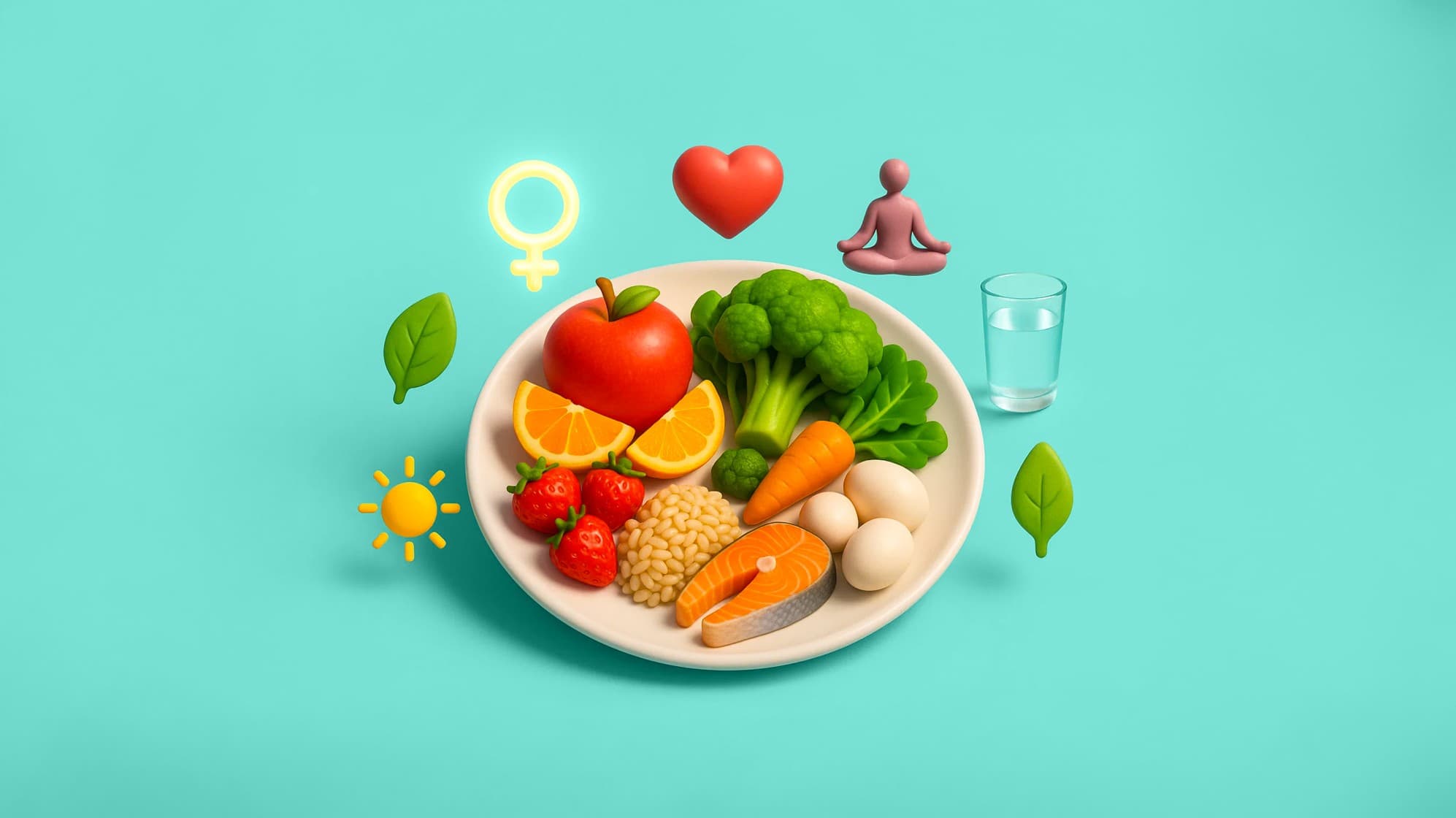
Balanced plate illustration with fruits, vegetables, whole grains, eggs, and fish surrounded by fertility and healthy lifestyle icons including heart, yoga pose, female symbol, sun, and water glass
Healthy Living and Fertility: A Guide for Patients
A healthy lifestyle is one of the most important ways to improve fertility and prepare for pregnancy. Simple changes in diet, exercise, and habits can make a big difference to both natural conception and IVF success.
Why Healthy Living Matters
- Improves egg and sperm quality
- Increases success of assisted conception
- Reduces risk of complications in pregnancy
- Supports long-term health for both parents
Diet and Nutrition for Fertility
Eat More Fruits and Vegetables
- Aim for at least 5 servings a day
- Include fresh, frozen, or lightly cooked vegetables
- Fruits like apples, bananas, citrus, berries, and pomegranate are excellent choices
Fill Up on Whole Grains
- Choose brown rice, oats, quinoa, wholemeal bread, multigrain rotis
- Provide energy, fiber, and essential nutrients
Proteins for Strength and Hormones
- Lean meats, fish, eggs, paneer, lentils, beans, and nuts
- Vegetarians can rely on dals, pulses, seeds, and dairy
Dairy for Calcium
- Include milk, yogurt, and low-fat cheese
- Choose low-fat varieties without compromising on calcium
Foods to Limit
- Processed and fried foods
- Excess sweets, sugary drinks, and refined flour
- Very high soy intake
- Limit caffeine to 1 cup/day or avoid completely during treatment
Essential Supplements
- Folic Acid: 400 mcg daily, starting at least 3 months before pregnancy and until 12 weeks of gestation
- Other supplements only if prescribed by your doctor
Lifestyle Tips
Maintain a Healthy Weight
- Ideal BMI: 21-25 (acceptable range 21-30)
- Both underweight and overweight can reduce fertility
Exercise Regularly
- Aim for 30 minutes, 3-4 times a week
- Brisk walking, yoga, swimming, or light cardio
- Helps control weight and reduces stress
Stay Hydrated
- Drink 8-10 cups of water daily
- Avoid excessive caffeine, sodas, and energy drinks
Limit Alcohol
- Best to avoid completely while trying to conceive
- If taken, keep to less than 6 units per week
Quit Smoking
- Smoking lowers egg and sperm quality
- Increases risks of miscarriage and complications
For Men: Sperm Health Matters
- Avoid frequent hot baths, saunas, or tight underwear (heat reduces sperm quality)
- Reduce alcohol and quit smoking
- Consider zinc and Vitamin E if advised by your doctor
- Speak with your doctor before taking any medications or supplements
Coping With Stress
Fertility treatment can be emotionally challenging. Stress itself is not harmful, but how you respond to it matters.
- Practice yoga, meditation, or relaxation techniques
- Stay active with light exercise
- Build a support network with family, friends, or counselors
- Seek professional support if needed
Remember
Healthy living is not about strict rules, but about balance. Small, consistent lifestyle choices can improve fertility and give your treatment the best chance of success.