



Erectile Dysfunction: A Complete Guide for Men and Couples
Erectile Dysfunction: A Complete Guide for Men and Couples
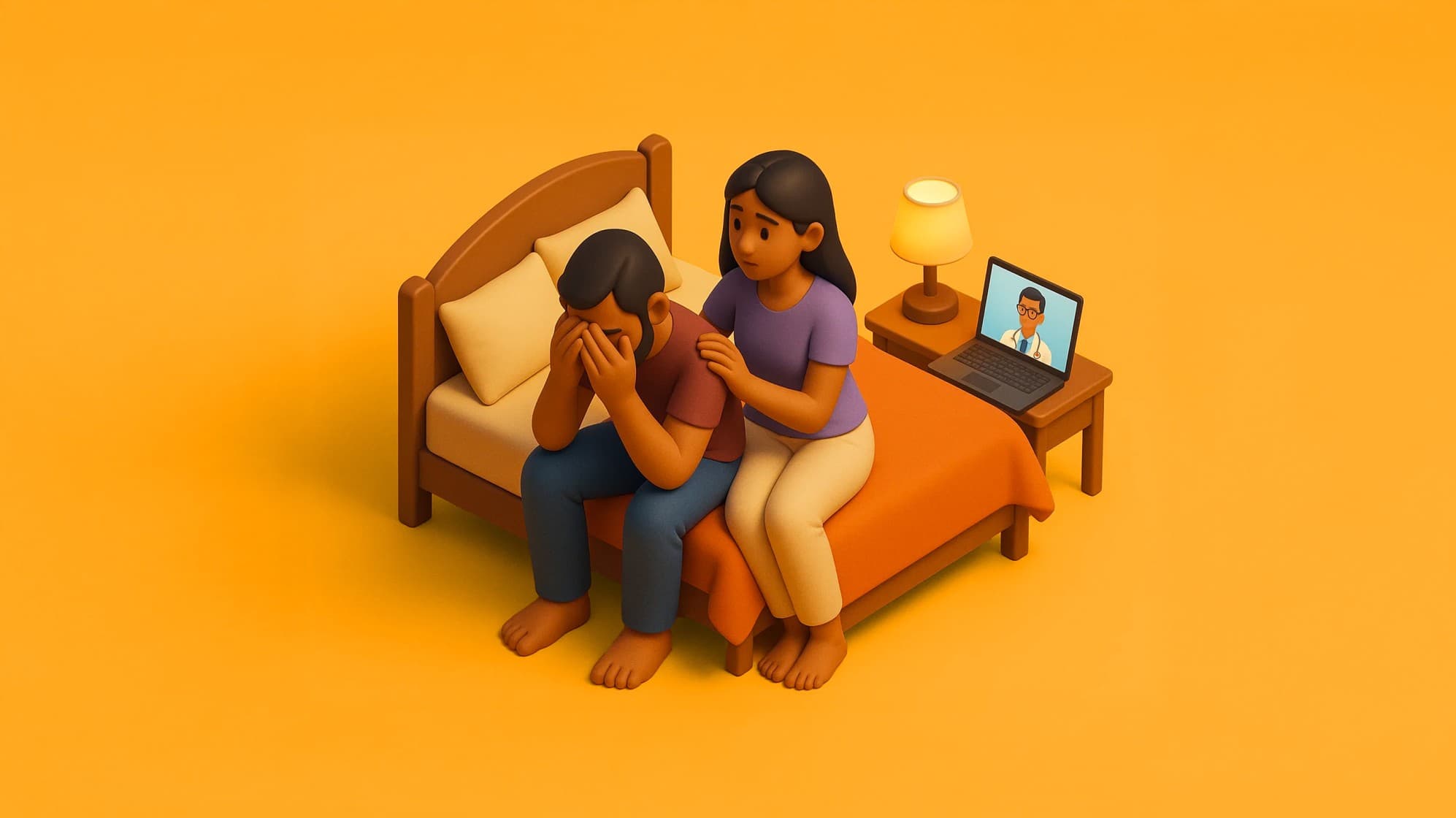
Man sitting stressed on bed with woman offering emotional support while consulting a doctor on laptop through online video call for erectile dysfunction treatment
Why Choose Donor Insemination (DI)?
Donor Insemination (DI) is a fertility treatment option designed to help eligible couples build their families when certain challenges arise. This guide is for couples exploring DI in alignment with Indian laws, including the Assisted Reproductive Technology (Regulation) Act, 2021, and the Surrogacy Act, 2021.
When is DI an Option?
DI may be an option when:
- The male partner is unable to produce sperm or has extremely low sperm quality.
- There is a risk of passing on a severe genetic condition from the male partner to the child.
Eligibility Considerations
Under Indian regulations, DI treatment is offered exclusively to legally married couples who meet specific medical criteria. This ensures ethical and transparent practices while respecting the guidelines set by the ART and Surrogacy Acts. Single women and same-sex couples are currently not eligible for DI under Indian law.
Our Approach to DI
At our center, we strictly adhere to all legal and ethical requirements, ensuring that the treatment is conducted with the utmost care and confidentiality. Our team will guide you through the process, from selecting a suitable donor from a certified sperm bank to completing all necessary screenings and tests. We emphasize using a Central Government-registered donor bank to ensure full legal compliance, adding a layer of security and trust to the process.
We are committed to supporting you with compassion and personalized care, offering clarity at every step of your fertility journey.
What Happens During DI Treatment?
On the first visit, you will meet with a counselor who will discuss why DI is required, alternatives to the treatment offered, what side effects of medication may be anticipated, and what tests are needed. All donors are blood tested for Hepatitis B and C, HIV, syphilis, and CMV. A CMV-positive donor is used for a CMV-positive recipient only.
Other ST diseases, such as chlamydia and gonorrhea, will be tested. Tests will also be conducted to ensure that you are vaccinated against rubella, commonly referred to as German measles. Based on your ethnic group, history, or geographic origin, some of the other tests may range from Sickle Cell tests, Tay-Sachs tests, or malaria tests.
Donor Selection
You will choose your sperm donor selection process based on specific criteria. Donors are typically:
- Aged between 18 and 45.
- Healthy individuals without any family history of inheritable diseases.
- Donors are highly screened for transmissible and genetic conditions like HIV, Hepatitis B and C, syphilis, and cystic fibrosis, among many other conditions. However, although the screening is intensive, it cannot provide 100 percent protection against all possible conditions.
What Can You Know About Your Donor?
Following the ART Act in India, only limited information about the donor is shared to ensure strict anonymity. You may receive non-identifying details such as the donor’s height, hair colour, and eye color. Additionally, you might have access to a brief description, often called a pen portrait, which provides insights into the donor’s personality and interests without revealing their identity.
It is important to note that the personal identification details of the donor are not disclosed under Indian law. This ensures the donor’s privacy while allowing intended parents to make informed decisions based on the permissible information.
Donor-conceived individuals can also access limited information at a later stage in life, subject to the legal framework and guidelines established by the ART Act. This balance safeguards both the donor’s anonymity and the rights of the donor-conceived child.
What Happens Next?
Once the clinic has completed all the screenings and consultations, you will be ready to begin your transplant process. The cycle will depend on your choice of DI type, which may be one of three types: Natural DI, Clomid DI (tablets that should be taken as fertility medication), or Gonadotropin DI, which utilizes hormone injections to bring about ovulation.
Now, the process involves insemination. This is where a fine tube containing the donor sperm is inserted through the cervix into the uterus. You will feel some slight cramping. Then, you would be taken home after a brief rest.
What Are the Risks?
Some minor risks include:
- Slight bleeding during the insertion process.
- If you’re using medications like Clomid or Gonadotropins, there’s a chance of producing more than one egg, which could increase the likelihood of twins. The clinic may halt treatment if more than two follicles (eggs) develop.
- There is also a small risk that some genetic conditions may not be detectable even after thorough screening.
What Happens After Insemination?
You’ll be required to do a blood test one week after insemination. They detect ovulation then. If your menstruation starts, you can be scheduled for another treatment. If it does not start after 14 days, you will have to take a pregnancy test. If the test is positive, the clinic will schedule a scan at 7 weeks to confirm that you are pregnant. If a heartbeat is detected, you will then be referred to your general doctor for routine prenatal care. If DI isn’t successful, the next step could be In Vitro Fertilization (IVF) with donor sperm. It depends on your location.
HomeIVF is Committed to Your Journey
HomeIVF is committed to providing the best care and support throughout your donor selection IVF process.