



Trigger Injection Schedule: A Patient’s Guide
Trigger Injection Schedule: A Patient’s Guide
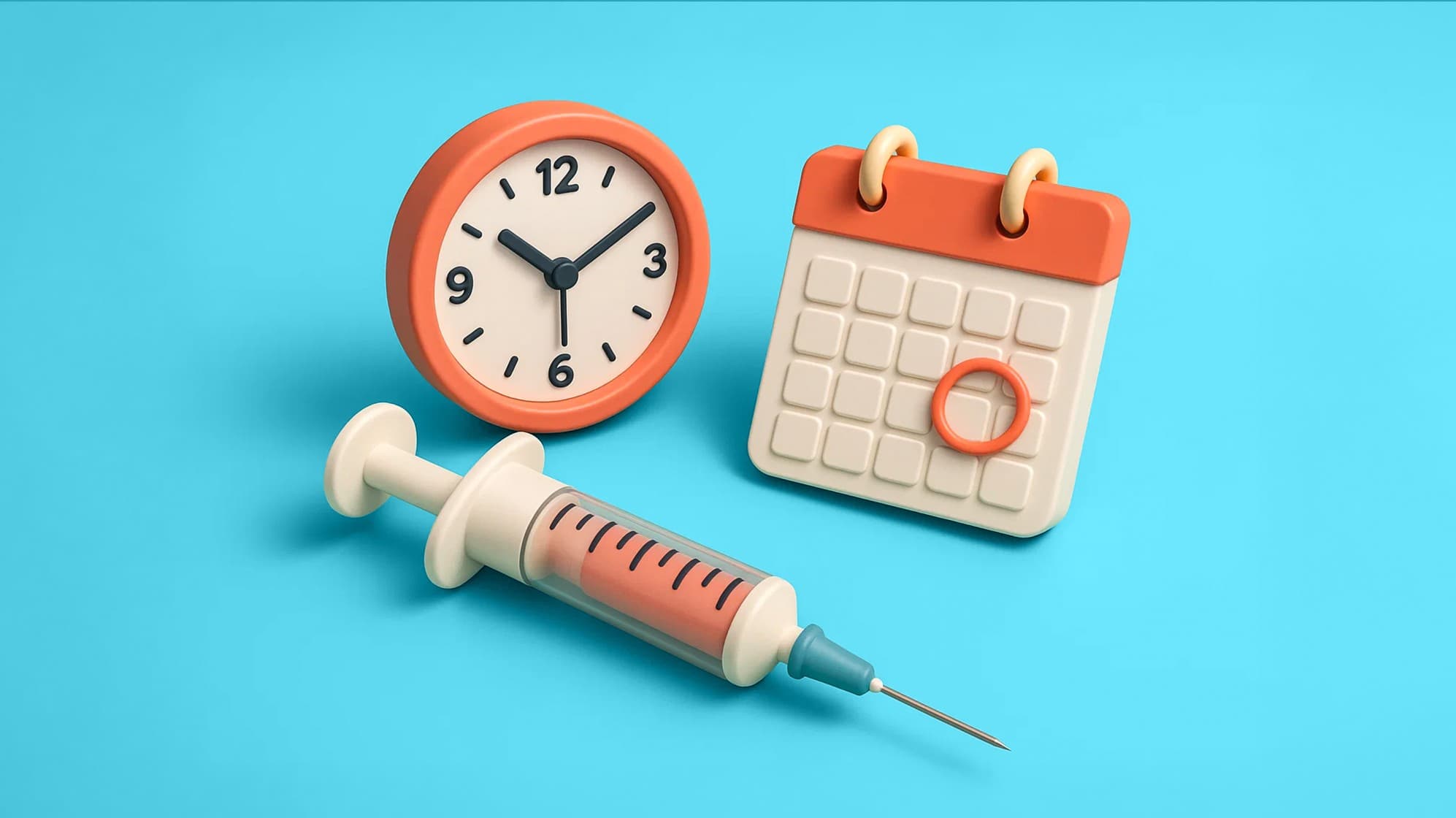
Illustration of a syringe, clock, and calendar highlighting the precise timing and scheduling of the IVF trigger injection
Trigger Injection Schedule: A Patient’s Guide
Understanding why timing is important in your IVF journey
What Is a Trigger Injection?
The trigger injection is one of the most important steps in IVF treatment. It helps your eggs complete their final stage of maturation so that they can be collected successfully.
Egg collection is usually scheduled 36 hours after this injection, which is why the date and time must be followed exactly as instructed by your fertility team.
Why the Date Is Important
- The date of your trigger injection is chosen based on ultrasound scans and blood tests.
- This ensures that your follicles have reached the right size, meaning the eggs inside are ready for final growth.
- If the injection is given too early, the eggs may be immature.
- If the injection is given too late, the eggs may already be released, making collection difficult or impossible.
Why the Time Is Important
- The time of the trigger injection is fixed so that egg collection can happen at the ideal stage of maturity.
- It is usually scheduled at night, often around 10:00 pm or later, depending on your treatment plan.
- Taking the injection at the exact prescribed time is important, even a delay of a few hours can affect the outcome.
- Incorrect timing may result in cycle cancellation.
Types of Trigger Injections
Your doctor will choose the type of trigger injection based on your treatment plan and your risk profile:
- hCG (Human Chorionic Gonadotropin): Most commonly used to mature eggs.
- GnRH Agonist Trigger: Sometimes used to reduce the risk of ovarian hyperstimulation syndrome (OHSS).
Both are safe and effective when taken exactly as instructed.
If You Miss or Delay the Injection
- If you forget or delay the injection, take it as soon as you remember (if within a couple of hours).
- Record the exact time you took it.
- Inform your clinic immediately the next morning.
- A significant delay may affect egg retrieval and could lead to cycle cancellation.
Do’s and Don’ts for the Trigger Injection
Do’s
- Take the injection exactly at the date and time advised.
- Prepare your injection in advance to avoid last-minute delays.
- Double-check the instructions with your nurse or doctor.
- Record the date and time after taking the injection.
- Inform your care team promptly if you face any issues.
Don’ts
- Do not change the date or time on your own.
- Do not delay the injection, even by a few hours.
- Do not ignore side effects or unusual symptoms.
- Do not skip informing the clinic if there was a mistake or delay.
Key Takeaway
The trigger injection is your final step before egg retrieval. Following the exact date and time prescribed by your fertility team is critical to ensure mature eggs are available for collection.
Remember: Precision here directly impacts the success of your IVF cycle.