



Surgical Sperm Retrieval: Making Parenthood Possible
Surgical Sperm Retrieval: Making Parenthood Possible
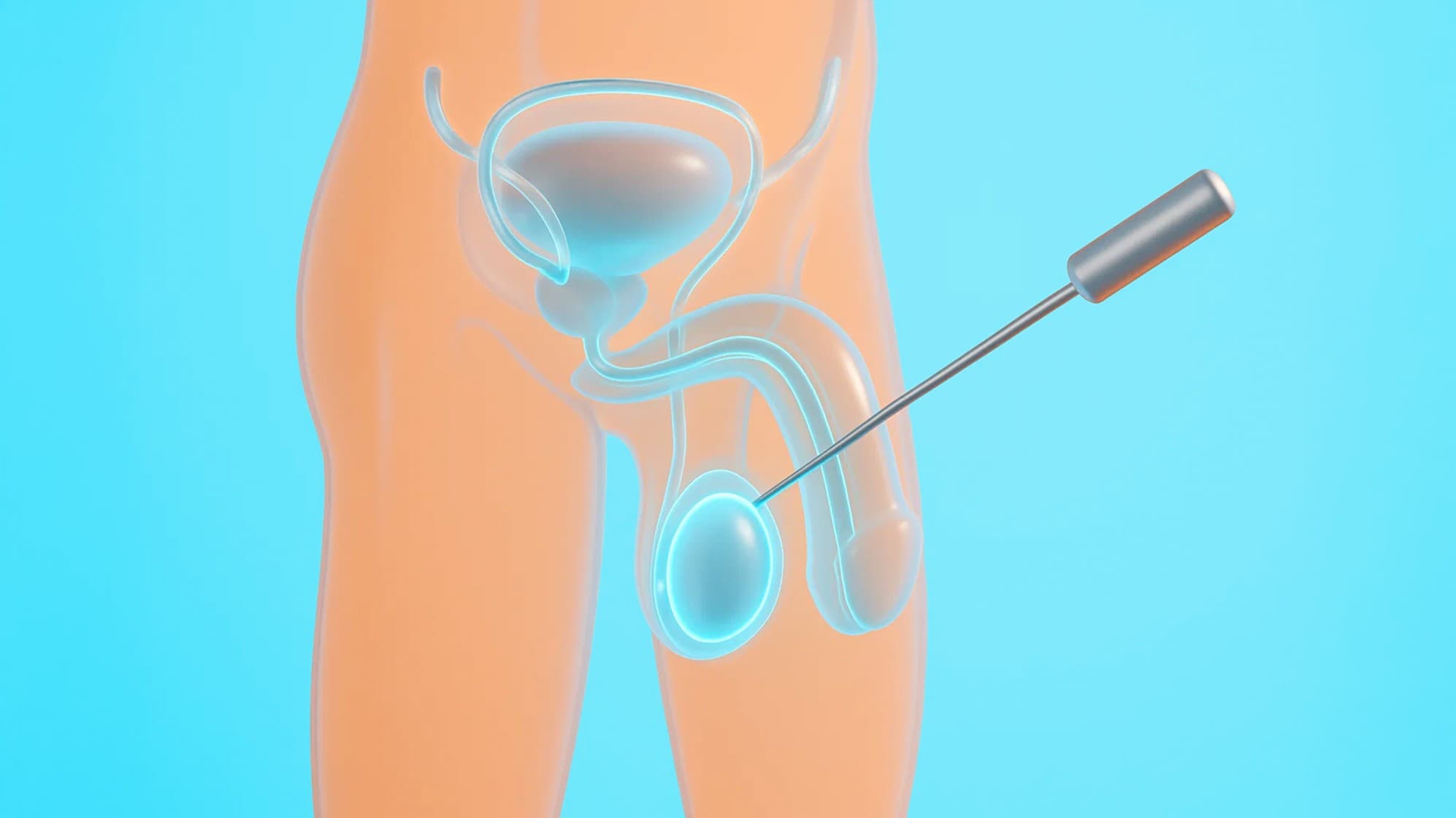
Illustration of surgical sperm retrieval procedure showing needle extraction from testicle for male infertility treatment.
What is SSR?
Surgical Sperm Retrieval IVF treatment (SSR) SSR is a medical procedure given to male infertility patients so that sperm can be obtained directly from the testicles. This minimally invasive process can also be done on a day under sedation. This now brings hope to men who have no sperm in their ejaculate due to various medical reasons.
Who Might Benefit from SSR?
SSR can be an alternative for men who do not ejaculate any sperm due to conditions like vas deferens blockage, absence of vas deferens, or epididymal blockage. For men with healthy spermatogenesis in their testicles, SSR offers a chance to retrieve these sperm. However, for those suffering from primary testicular failure, where the testicles do not produce sperm at all, SSR is not suitable.
Types of SSR Procedures
There are different types of SSR, and the choice of method depends on the individual’s condition and the underlying cause of sperm absence. Below are the main procedures:
-
PESA (Percutaneous Epididymal Sperm Aspiration): PESA fertility treatment involves inserting a fine needle into the epididymis (a tube near the testis) through the scrotum. Fluid is drawn and examined for sperm under a microscope. The procedure is quick, lasting around 15-20 minutes, and is relatively painless.
-
TESA (Testicular Sperm Aspiration): If no sperm is found in the fluid collected during PESA, TESA treatment might be performed. In this procedure, a needle is inserted into the testicle itself to extract tissue, which is then examined for sperm. Similar to PESA, it is minimally invasive and generally well-tolerated.
-
TESE (Testicular Sperm Extraction)/Testicular Biopsy: In cases where no sperm is found during the PESA or TESA test, a small incision is made in the testicle, and a sample of tissue is taken. While this procedure may cause mild discomfort, it is effective for retrieving sperm directly from the testicular tissue. Patients usually recover within a few days, and antibiotics may be prescribed to prevent infection.
Effectiveness and Fertility Outcomes
Sperm obtained by SSR can be used directly in a fresh IVF or ICSI cycle, or it can be frozen for future use. Freezing the sperm does not impair its capability to fertilize a mature egg at a later stage. However, sperm obtained through SSR are generally scarce in number and not fully developed for standard IVF procedures. Instead, ICSI, (Intra Cytoplasmic Sperm Injection), a procedure is used, where one spermatozoon is injected into each egg.
In some cases, non-motile (non-moving) sperm may be all that is available. This can reduce the chances of successful fertilization, and no fertilization may occur. Lastly, there is a small chance that no sperm will be retrieved during this procedure.
Risks and Considerations
SSR is generally considered a safe procedure, but like any medical intervention, it carries some risks. These include:
-
Bruising or collection of blood in the testicles (hematoma)
-
Infection at the site of the procedure
-
Anesthetic risks such as nausea, vomiting, and rare allergic reactions
It’s important to follow the pre-procedure instructions carefully, such as fasting for at least six hours and avoiding chewing gum or smoking. Make sure to inform the medical team of any medications you’re taking to avoid complications.
What to Expect After the Procedure
Patients should be advised to wear tight-fitting underwear after the SSR procedure for support and should avoid sexual activity for at least a week. Showering is recommended over bathing to reduce the risk of infection. You will be advised on how to manage the discomfort you will experience, and an appointment for follow-up will be scheduled to discuss further treatments for your fertility.
Emotional Support and Follow-up Care
At HomeIVF, we understand that infertility treatment can also be emotionally challenging. If counseling is needed during treatment, we do have professional counsellors to support you in addressing some of those emotional aspects of the journey. We are here to guide you at every step along the journey while making sure you have access to the necessary care and resources.
Surgical Sperm Retrieval is an advanced procedure that provides hope for couples facing male infertility challenges. It is recommended in cases where sperm is not present in the ejaculate due to conditions like a blockage, prior vasectomy, or other medical issues. Techniques such as Testicular Sperm Aspiration (TESA), micro-TESE, and Percutaneous Epididymal Sperm Aspiration (PESA) are employed based on individual medical needs.
Conclusion
While surgical sperm retrieval can enable the use of the retrieved sperm for assisted reproductive techniques like IVF or ICSI, it’s important to understand that the procedure’s success depends on various factors, including the underlying cause of infertility and sperm quality. We adhere strictly to the guidelines of the Assisted Reproductive Technology (Regulation) Act, 2021, ensuring ethical and evidence-based practices.
Our team provides clear and personalized guidance, helping you make informed decisions based on your unique circumstances. If you have questions about the procedure or its suitability for your situation, we are here to support you at every step of your fertility journey.
FAQs
Q. What conditions make SSR necessary?
A. SSR is recommended for men who do not ejaculate sperm due to conditions like vas deferens blockage, absence of the vas deferens, or epididymal blockage. It is not suitable for men with primary testicular failure, where the testicles do not produce sperm.
Q. What are the chances of success with SSR?
A. The success of SSR depends on factors like sperm count and quality, as well as the underlying condition. Sperm retrieved through SSR can be used in IVF or ICSI, but the number of sperm might be limited, and non-motile sperm could affect fertilization rates.
Q. What should I expect after the SSR procedure?
A. After SSR, you may experience mild discomfort or bruising. It is advised to wear tight-fitting underwear for support and avoid sexual activity for a week. Follow-up care and counseling are available to ensure emotional and physical recovery.